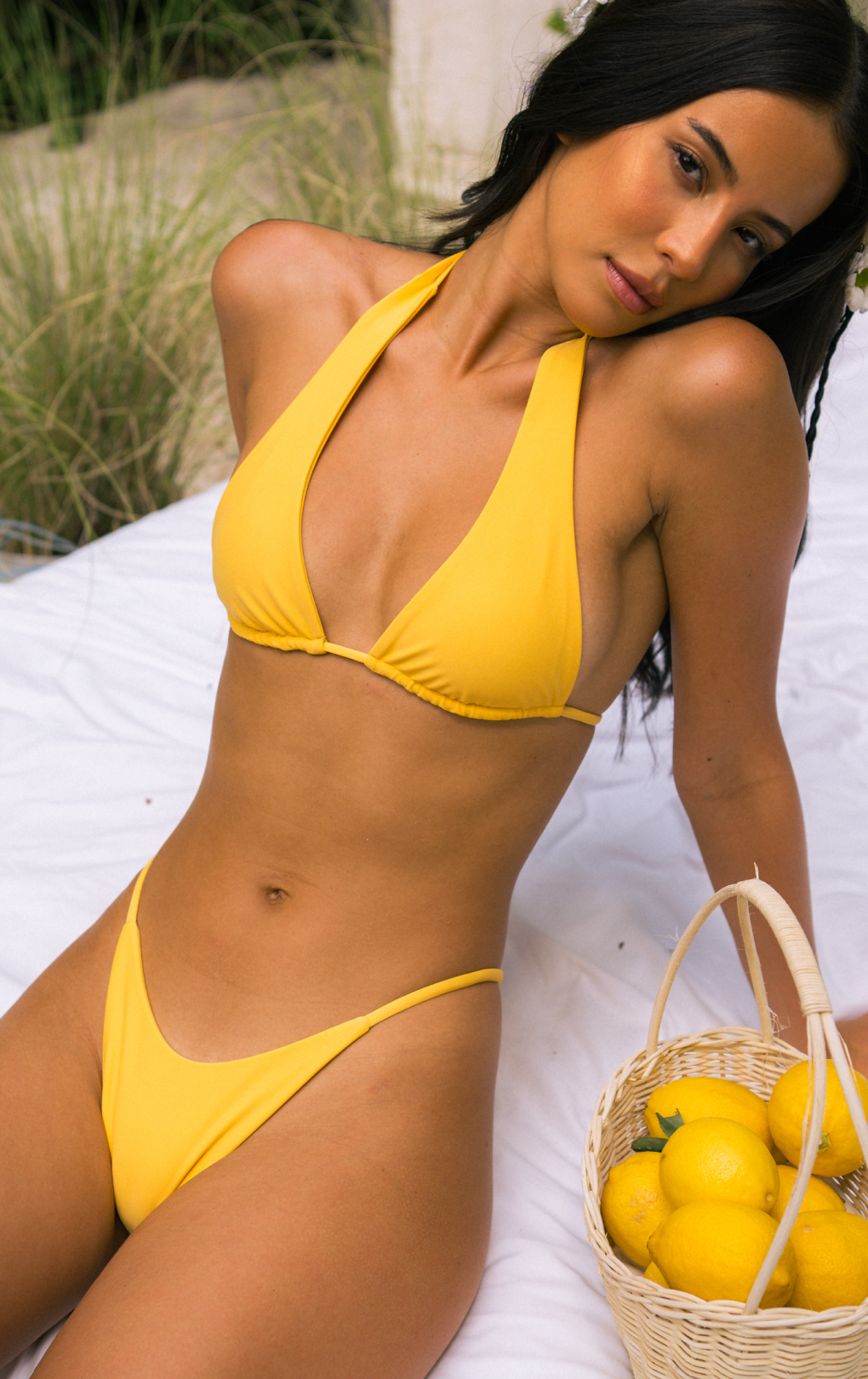
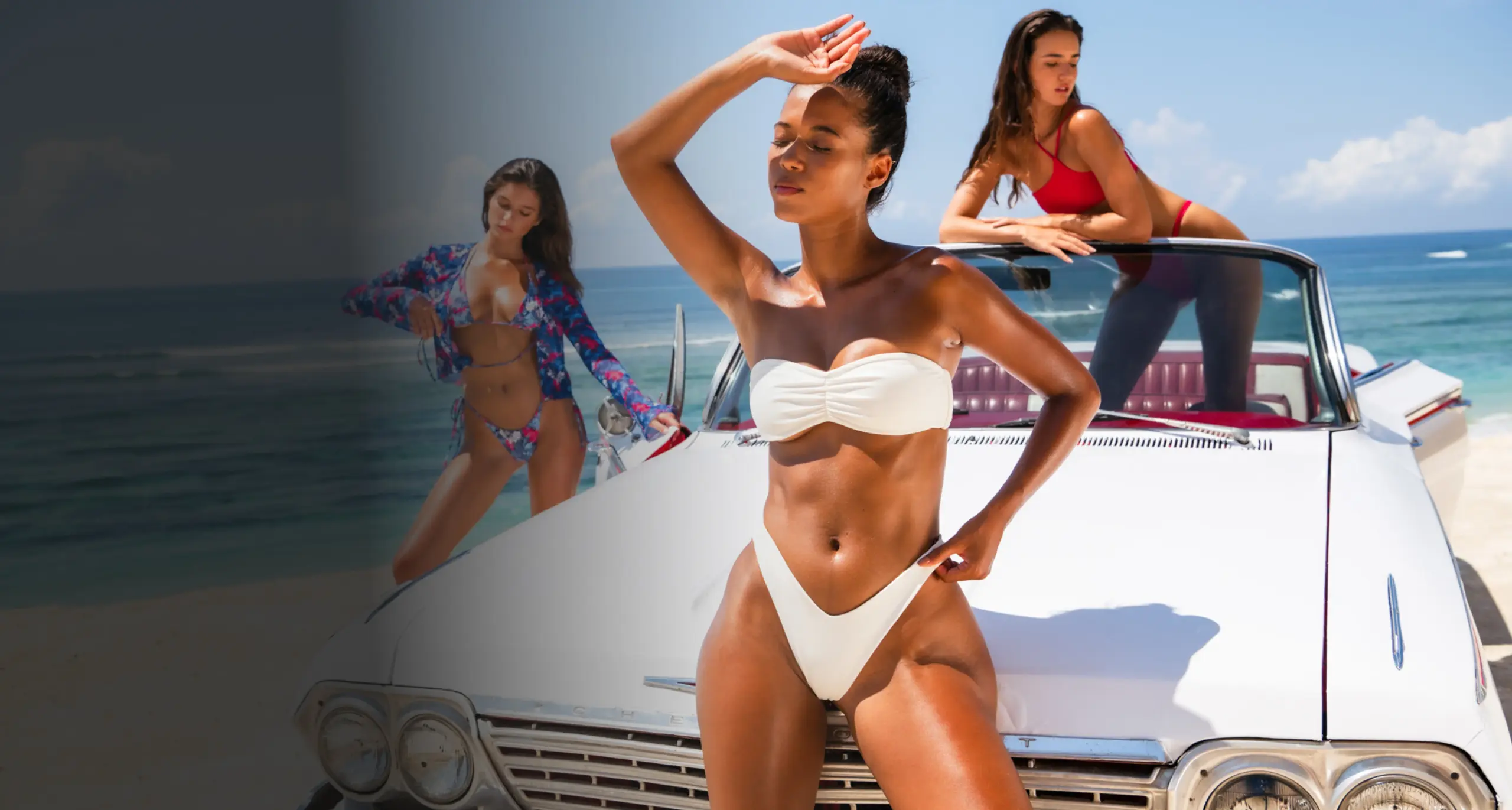
Sunkissed Halter Top & Cheeky High-Cut Bottom
CAD optimized with graduated cradle angles, curved neck band contours to stop skin digging, and precise high-hip apex arcs.
Compatible: Carvico Vita · Sumatra · Pantelleria · Eco Lustra
Why do global swim brands abandon manual cardboard templates for vector-based 2D CAD engineering? Discover how Swime Swimwear Co., Ltd. applies millimeter-precise stretch calculations, high-modulus negative ease algorithms, and rapid sample prototyping to build zero-defect bikinis and one-pieces.
CAD Sampling Studio, Kerobokan Bali In conventional apparel manufacturing, pattern blocks rely primarily on static human ergonomics with standard positive seam allowances. In technical swimwear engineering, that approach fails entirely. Swimwear operates on negative ease—the finished garment must measure between 10% and 22% smaller than the static circumference of the body to maintain anatomical hold, sculpted contours, and hydro-lock friction against salt and chlorinated water.
When drafting patterns for 4-way stretch circular knits such as Italian Carvico Vita (ECONYL® regenerated nylon with 22% elastane) or US-engineered Eco Lustra, manual paper drafting introduces accumulated human tracing errors. A 2mm shift on an armhole curve or crotch apex translates to an unacceptable 8% change in tension recovery on the human torso. With 2D AutoCAD swimwear pattern making, our technical modelers draft with parametric vectors accurate to 0.01mm.
Every polyline in our CAD workstations is assigned a specific modulus tension coefficient. We balance cross-grain stretch (which typically ranges from 60% to 110%) against straight-grain tension (35% to 55%) while calculating real-world elasticity variations that occur when raw fabric absorbs water. As a result, seamless edges lie flush against the skin without rolling, rubber elastics feed evenly without puckering, and cup apexes retain lift across dynamic movement.
Once your master pattern is mathematically approved in 2D AutoCAD, the digital block remains identical forever. When your label expands production or reorders next season, the cut profile will never deviate by a single thread.
Precision Quality Standard: ISO-calibrated digital digitizingSwime Swimwear Co., Ltd. retains 65 dedicated full-time specialists in Kerobokan, Bali, eliminating outsourcing bottlenecks:
From complex supportive underwire armatures to minimalist seamless raw-edge silhouettes, explore how precision CAD modeling translates to high-yield commercial collections.

CAD optimized with graduated cradle angles, curved neck band contours to stop skin digging, and precise high-hip apex arcs.
Compatible: Carvico Vita · Sumatra · Pantelleria · Eco Lustra

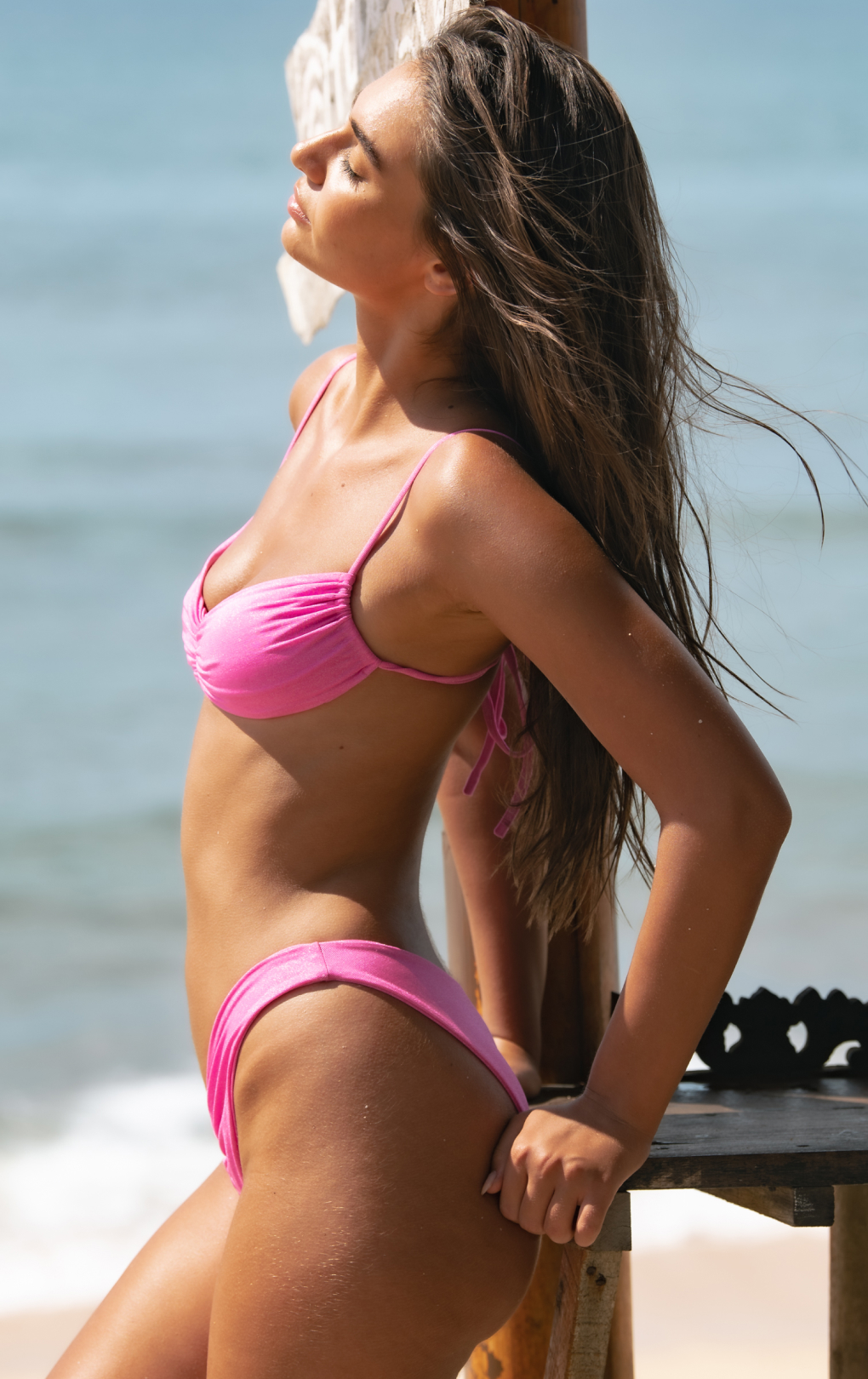
Engineered using layered AutoCAD tension lines. Elastic gathering margins calculate exact gathering ratios of 1.8:1 without over-stretching.
Compatible: Vita Shimmer · Sumatra Textured · REPREVE Digital

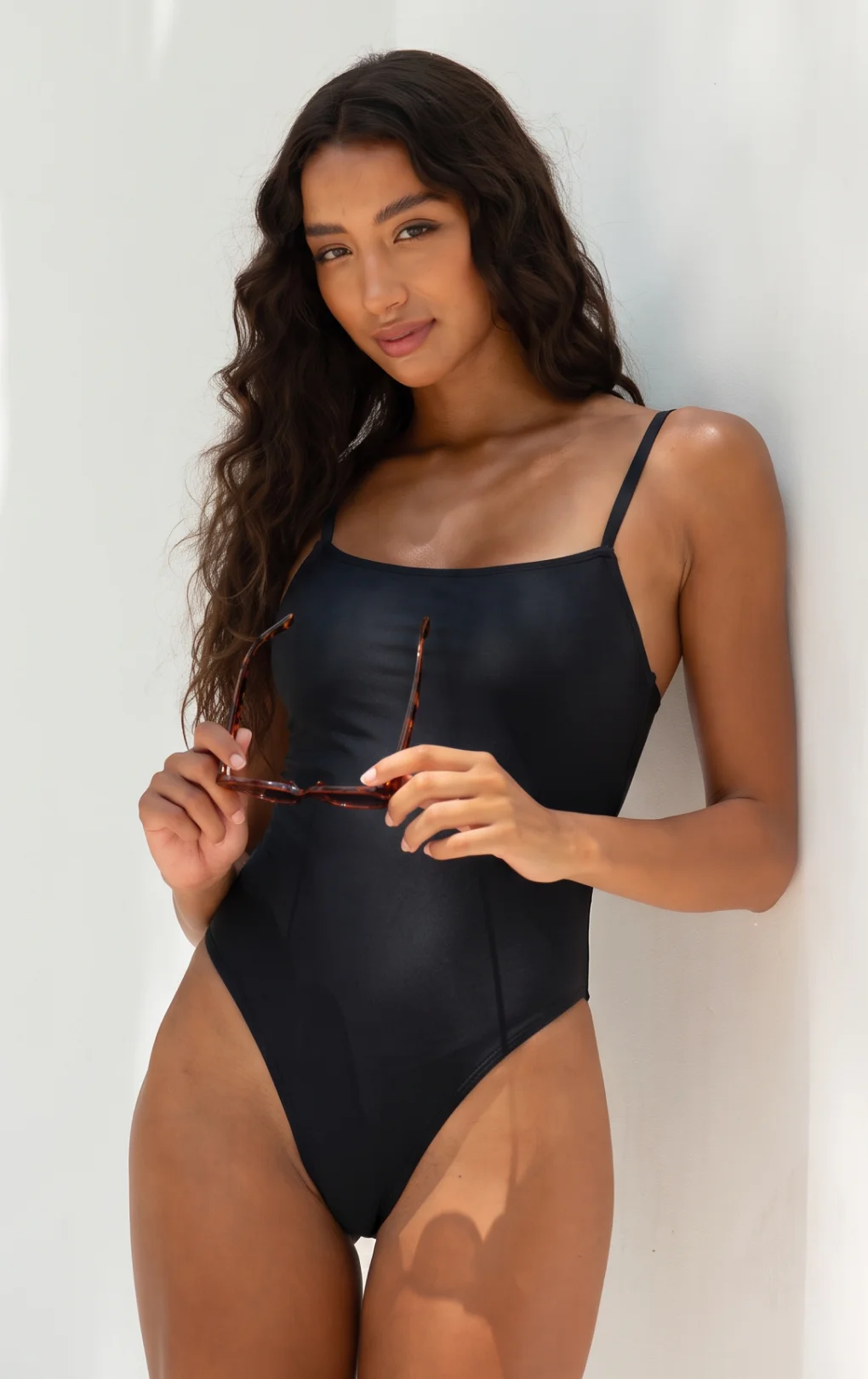
Monolithic one-piece pattern with dual-axis torso tension balancing. Eliminates low-back gaping and side-bust sliding.
Compatible: ECONYL® Vita · Sumatra · Pantelleria Rib

Structural CAD inner construction with built-in invisible silicone bonding paths and stabilizing center bridge balance points.
Compatible: Double-Lined Vita · Custom Digital Sublimation
Global procurement dynamics for premium private label swimwear are transforming rapidly. Sourcing directors and independent label founders must align with these 4 dominant technological procurement shifts over the next 3 to 5 years:
While 3D virtual avatars (CLO3D, Browzwear) capture social media buzz, high-performance manufacturing still demands 2D vector CAD for exact flat cut pieces. The emerging trend merges 2D AutoCAD geometry directly with 3D tension heatmaps. This enables buyers to visually stress-test bust support and high-cut tension before physical cutting, slashing sampling rounds by 60%.
With high-end sustainable Italian fabrics like Carvico Vita representing significant garment landed cost, AI-driven CAD nesting algorithms now arrange intricate bikini pattern pieces with under 8% selvedge waste. Automated rotation and interlocking spline borders translate directly into lower wholesale unit pricing for boutique and scaled brands alike.
Static proportional sizing is obsolete. Modern procurement demands non-linear grading: an XL or 2XL requires increased cup root radius, reinforced underband stabilization, and relocated strap load-points rather than uniform magnification. 2D AutoCAD allows mathematical curve offsets that maintain silhouette integrity across sizes XS through 4XL.
Instead of applying random all-over prints, leading brands engineer print files mapped directly onto 2D CAD pattern pieces. Floral placement, geometric framing, and brand logos match perfectly across front and back side seams, printed digitally on US REPREVE recycled nylon utilizing Italian industrial MS printers.
Global customs compliance and eco-certifications (GRS, OEKO-TEX Standard 100) are increasingly auditing CAD consumption markers. Digital AutoCAD cutting layouts prove exact fabric usage per unit, guaranteeing absolute transparency from raw regenerated yarn through finished packaged bikinis.
Traditional 12-month fashion cycles have collapsed into responsive 4-to-6 week drops. Digital CAD pattern making empowers labels to tweak necklines, strap widths, or leg rises overnight, moving into cutting without re-tooling physical dies.
Explore how our Bali sampling studio engineers custom tech packs through specialized software commands, fabric modulus calculations, and precision CNC cutting.
| Workflow Phase | CAD Operations & Commands | Technical Input Required | Modulus / Tolerances | Output Deliverable |
|---|---|---|---|---|
| 1. Digitization & Block Drafting | Vector tracing, spline generation, polyline boundary closure, center-front/back baseline alignment. | Hand sketches, tech packs, or benchmark physical garments. | 0.01mm mathematical vector boundary accuracy. | Base Size S (US 4/AU 8) master vector DXF/DWG file. |
| 2. Fabric Tension Compensation | Parametric scaling (X/Y axis offset), negative ease insertion, stretch ratio reduction. | Fabric lab test results (ECONYL, Carvico Vita, REPREVE, Eco Lustra). | -12% to -18% horizontal girth; -6% to -10% vertical torso. | Tension-compensated digital master cut piece. |
| 3. Seam & Hardware Annotation | OFFSET commands for 6mm rubber tape, 10mm flatlock, zig-zag seam allowances, hardware notch markers. | Stitch type specs (seamless, raw cut, bound edge, underwire casing). | Exact +/- 0.5mm seam edge tolerance matching industrial folders. | Sewing-ready production pattern block with notch paths. |
| 4. Non-Linear Digital Grading | Rule-table vector grading across XS, S, M, L, XL, XXL, and cup subdivisions (A through DD+). | Target brand size chart, anthropometric standard benchmarks. | Graduated pitch rates (varying step changes for bust, waist, and hip). | Complete multi-size graded DXF nested master file. |
| 5. High-Efficiency Marker Nesting | Automated rotation constraint nesting, grainline locking, directional print orientation matching. | Roll fabric width (140cm to 152cm usable width). | Minimum 88% to 92% fabric utilization efficiency. | Production cut-plotter marker file for CNC industrial cutters. |
Established in 1993 in Kerobokan, Bali, Swime Swimwear Co., Ltd. is not a broker, agent, or commercial trading house. We are a direct, ethical, vertically integrated swimwear factory specializing exclusively in swim and resort wear.
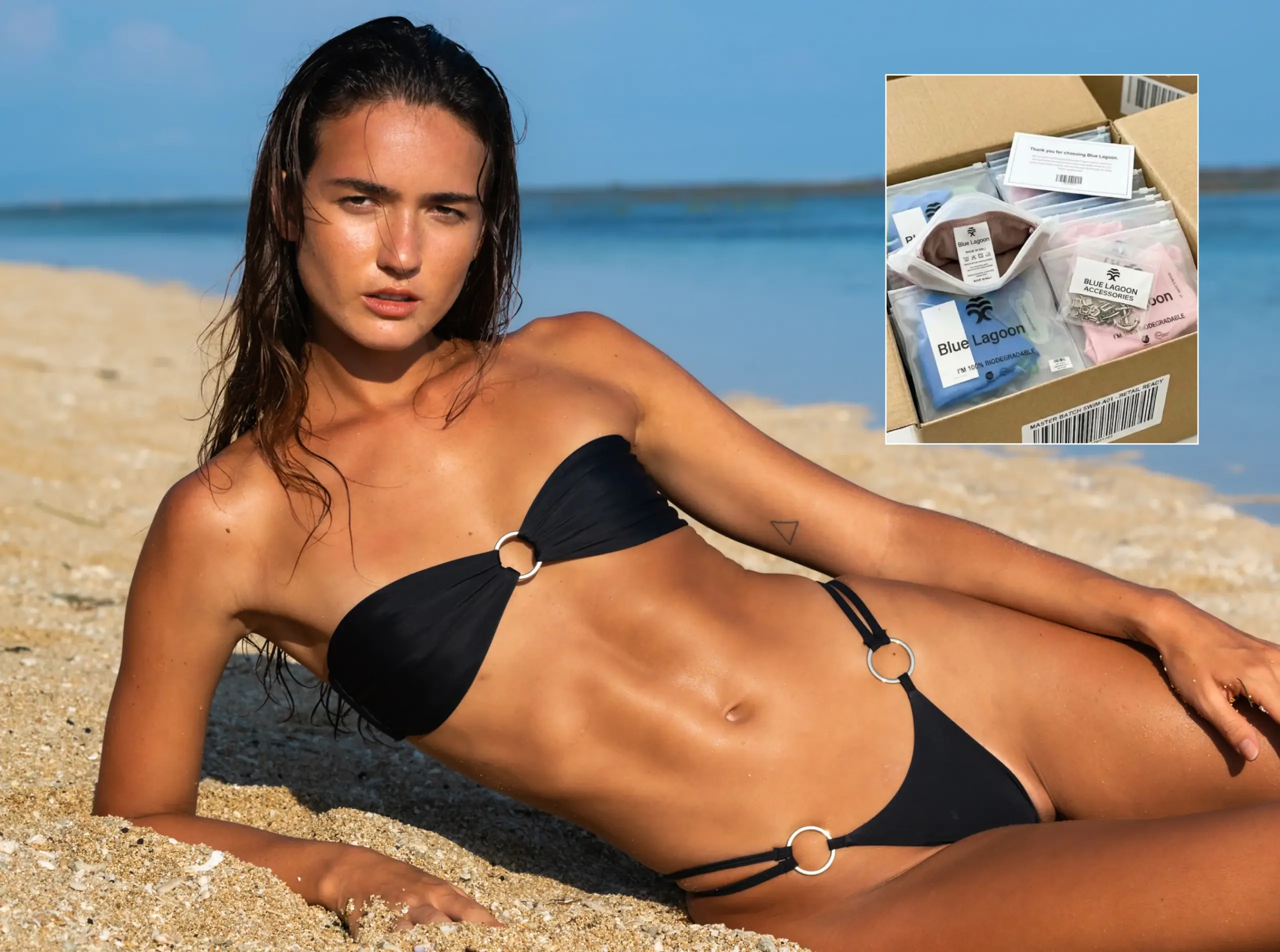
Retail-Ready Branded Garments All factory tailors and studio specialists receive over double the regional minimum wage, comprehensive healthcare, and full paid leave.
If a first prototype deviates measurably from your approved handover tech specs, our CAD team corrects and remakes the piece free of charge.
Technical, financial, and operational answers for apparel founders, product managers, and sourcing directors.
Traditional manual paper pattern making suffers from edge wear, humidity distortion (which in tropical climates can alter dimensions by 3-5mm), and imprecise manual scissor grading. 2D AutoCAD pattern drafting delivers parametric accuracy down to 0.01mm, guarantees absolute symmetry across complex curves, and allows direct mathematical calculations of fabric negative ease based on specific knit modulus ratings.
Furthermore, digital CAD files export directly to CNC automated fabric cutting machines, maximizing yield by up to 15% and keeping your wholesale unit prices lean. Learn more about our digital workflow in our Swimwear Sampling Studio.
Negative ease is calculated by conducting stretch-recovery pull tests on certified fabric specimens. For Carvico Vita (78% ECONYL® regenerated polyamide, 22% elastane), the typical horizontal elongation is 110% with a 95% recovery rate.
In 2D AutoCAD, we apply an average negative ease factor of -14% to -18% across horizontal girth lines (bust apex, underbust, waist, and hip) and -6% to -10% along the vertical torso line. For high-compression styles or double-lined reversible swimwear, these values are mathematically customized to maintain sculpting support without creating painful edge pressure.
Yes. Approximately 60% of our custom clients launch by submitting front and back reference photographs, dimensional sketches, or physical benchmark garments. Our technical pattern makers deconstruct the proportions, trace curves on high-resolution digitizer tables, and reconstruct clean vector geometry within 2D AutoCAD.
If you provide physical benchmark samples, we measure stretch modulus and tension profiles to replicate that exact fit while implementing your proprietary design lines and custom branding.
We work seamlessly with industry-standard CAD formats. We accept and export native AutoCAD (.DWG, .DXF), ASTM D6673 / AAMA DXF apparel interchange files, Gerber (.zip / .acc), Lectra (.iba / .vet), and 1:1 true-scale PDF vector blueprints.
For brands utilizing internal 3D simulation tools like CLO3D or Optitex, our 2D DXF files import with cleanly closed vector boundaries and pre-defined notch points ready for virtual sewing.
In 2D AutoCAD, we create dedicated artwork placement layers aligned with outer seam cut lines. For engineered digital printing, graphic designs are nested precisely inside the graded pattern perimeter with bleed margins and shrinkage allowances accounted for.
Using our in-house Italian MS industrial digital printing systems on recycled REPREVE® nylon, we ensure artwork elements, side seam stripes, and floral layouts register cleanly without distortion upon stretching. Review full specifications at our Digital Swimwear Printing page.
Our MOQs are structured on a per collection basis rather than restrictive single-style thresholds. Custom collections built from your exclusive 2D AutoCAD patterns start at just 400 pieces total across your entire capsule (minimum 40 pieces per style, with 4 pieces per size and colour combination).
For startup brands seeking immediate launch flexibility, our proven library of Ready Designs features a low collection MOQ of 300 pieces (minimum 30 per style, 3 per size/colour). You can combine custom hero styles with Ready Designs in one unified production run.
Using any of our 200+ in-stock fabric colours, initial CAD drafting and physical sewn prototype samples take 1 to 3 weeks. Ready Design samples complete in 1 to 2 weeks.
Following your sample approval and deposit, bulk production completes in 3 to 5 weeks, followed by 3 to 5 business days for door-to-door express delivery via DHL Express to the US, Australia, Europe, or worldwide.
Custom swimwear samples are billed at double the bulk unit price plus a modest USD 30 CAD pattern engineering development fee per style. Crucially, this USD 30 fee is fully credited back against your bulk production deposit once you place your collection order, ensuring zero lost overhead for serious brands.
Partner with Bali's premier swimwear manufacturer since 1993. Send your design sketches, mood boards, or tech packs today. Receive an itemized B2B cost estimation and CAD feasibility review within 2 to 3 business days.