
GRS & OEKO
Certified Recycled Fibers
300+ Brands
Scaled Globally Since 1993
1–3 Weeks
Fast Precision Sampling
−80% CO₂
Lower Lifecycle Emissions
Production-Ready Formats
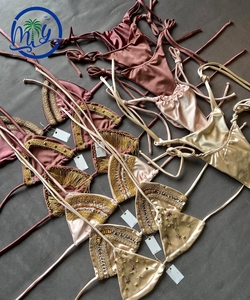
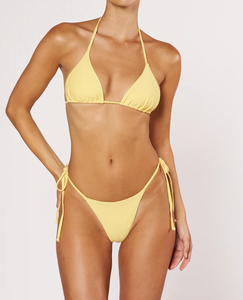
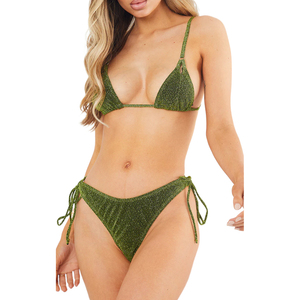
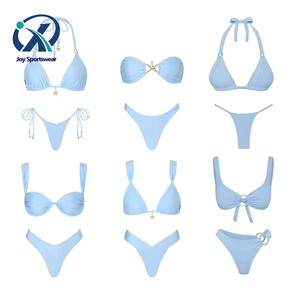
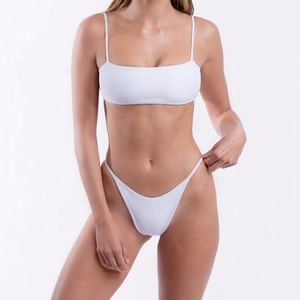
High-Performance Recycled Bikini Formats & Ready Tech Packs
Engineered with four-way stretch memory, UV50+ protection, and micro-denier regenerated ocean plastic polymers. Available for bespoke OEM/ODM manufacturing and private labeling.


Direct Factory Ecosystem
End-to-End Vertical Capabilities Built for Private Labels
Combining three decades of swimwear mastery with specialized bonded-zone material import facilities, automated grading, and closed-loop environmental standards.
Bonded Import Facilities & Tariff Optimization
Under our specialized bonded licensing systems, premium textiles such as authentic Italian Carvico Vita, Sumatra, and Pantelleria are imported duty-free. This mitigates approximately 35% in landed raw material tariffs, translating directly into highly competitive factory-direct pricing for international private labels.
2D AutoCAD Precision Drafting & Micro-Grading
Poor fit is the primary driver of swimwear returns. Our engineering room operates in-house computerized pattern studios staffed by veterans averaging 10+ years in anatomical contouring. Every seam, dart, and reversible edge is systematically calculated to provide body-sculpting hold without elastic degradation.
Turnkey Retail Packaging & IP Protection
We operate exclusively on B2B OEM/ODM manufacturing—strictly preserving absolute client design confidentiality under signed NDAs. All finished pieces leave the line retail-ready, fitted with branded heat-pressed care labels, custom alloy hardware, and eco-friendly biodegradable ziplock packaging.
Strategic Procurement
Emerging Procurement Trends in Recycled Swimwear (2026–2030)
In-depth technical analysis for sourcing directors, inventory managers, and independent apparel founders navigating compliance, synthetic regulation, and shifting consumer sentiment.
1. Closed-Loop Traceability via Digital Product Passports (DPP)
Global procurement requires empirical verification over greenwashing claims. European Union Ecodesign requirements (ESPR) are transitioning recycled compliance from basic paper certificates into scannable Digital Product Passports. Fabric suppliers must provide unbroken chain-of-custody documentation tracing post-consumer fishing nets (ECONYL®) or PET bottles (REPREVE®) from ocean extraction to knitted yarn.
2. Dynamic On-Demand Printing & Zero Water Discharge
Traditional screen printing is being replaced by high-definition industrial Italian MS digital printers. Utilizing aqueous, non-toxic disperse inks compliant with OEKO-TEX® Standard 100, this method achieves vivid photographic detail without hydraulic wastewater dumping. Production batches move smoothly down to smaller, highly responsive run sizes without costly screen setups.
3. Resilient Chlorine & Lipid Resistance Technology
A persistent flaw of early recycled nylon iterations was quick matrix breakdown when exposed to pool chlorine, sunscreens, and body oils. Next-generation circular textiles incorporate engineered elastane copolymers (such as LYCRA® XTRA LIFE™). This prevents fiber thinning, sagging, and micro-tearing up to ten times longer than conventional elastane compositions.
| Material Matrix | Feedstock Source | Tensile Recovery | Resilience (Chlorine/Lipids) | Environmental Gain |
|---|---|---|---|---|
| Carvico Vita (ECONYL®) | 100% Regenerated Ghost Fishing Nets & Industrial Nylon Waste | Superior 4-Way Elastic Memory | Extreme (Engineered with Xtra Life Lycra) | 80% CO₂ Reduction vs. Virgin Nylon |
| REPREVE® Recycled Poly | Post-Consumer Traceable Ocean-Bound Plastic Bottles | High Structural Modulus | High (Exceptional Color Fastness in UV) | Reduces Water Footprint by >85% |
| Standard Virgin Polyamide | Petrochemical Refining (Crude Oil) | Moderate Degradation Over Time | Moderate (Prone to Sunscreen Delamination) | Baseline Carbon & Microplastic Footprint |
Technology Horizons
The Evolution of Sustainable Swimwear Manufacturing
A systematic overview of mechanical transformations and structural advancements reshaping technical beachwear exports.
Mechanical Recycling to Chemical Depolymerization
First-generation recycled textiles relied heavily on mechanical melting of clear PET bottles, yielding rigid yarns prone to pilling and color limitations. Contemporary manufacturing leverages advanced chemical depolymerization. By breaking down polymer chains back to their pure virgin monomer state, impurities are entirely extracted. This yields an endlessly circular nylon fiber identical in hand-feel, dye affinity, and stretch resilience to virgin petroleum fibers.
Bonded Ultrasonic Seams & Seamless Edge Assembly
Traditional needle stitching punches thousands of micro-holes into delicate stretch fabrics, compromising water drag and structural integrity over long usage. Modern export standards utilize high-frequency ultrasonic welding and micro-elastic thermal bonding. This creates hydro-smooth, ultra-flat profiles that prevent chafing, enhance compression control, and provide modern silhouettes demanded by upscale global resort labels.
Intelligent Production Sizing & Reduced Fabric Waste
Historically, swimwear pattern cutting resulted in 15% to 22% scrap fabric waste due to curved, organic pattern geometry. Contemporary production suites employ automated nesting algorithms connected directly to 2D AutoCAD outputs. By dynamically arranging pattern pieces across fabric rolls with millimeter tolerance, yield efficiencies surpass 92%, drastically lowering both material expenditure and landfill impact.
Procurement Insights
Frequently Asked Sourcing & Manufacturing Questions
Clear, direct specifications regarding lead times, certification documentation, minimum order quantities, and export customs.
What is the realistic MOQ structure for custom swimwear?
Our production orders are governed on a per-collection aggregate basis rather than single SKU constraints. For complete custom bespoke designs, our minimum order quantity starts at 400 pieces across the collection (with a minimum of 40 pieces per style across 4 sizes and colorways). For our pre-patterned Ready Designs, the threshold begins at 300 pieces per collection, allowing brands to launch diversified capsules with minimal inventory risk.
How are GRS and OEKO-TEX® certifications documented for import?
Every commercial bulk order using certified recycled nylon (ECONYL® / REPREVE®) is accompanied by official Transaction Certificates (TC) issued by authorized third-party registrars. These documents mathematically confirm the specific weight of recycled feedstock utilized in your batch, ensuring seamless customs clearance through EU and North American border authorities without tariff classification delays.
What are standard sampling lead times and bulk delivery schedules?
By keeping over 200 standard colors of certified recycled Italian and domestic fabrics in rolling warehouse stock, initial prototypes and custom grading rounds are turned around within 1 to 3 weeks. Upon formal sample sign-off and tech pack approval, bulk manufacturing requires approximately 3 to 5 weeks, followed by 3 to 5 days express door-to-door air freight dispatch globally.
How do you ensure zero transparency on light-colored bikinis?
Opacity in swimwear is dependent on areal density (GSM) and internal lining architecture. All light-colored garments (such as ivory, pastels, and whites) are engineered with an integrated double-layer lining constructed from high-gauge, high-modulus recycled micro-knit. This achieves complete opacity both dry and fully saturated in water, verified during rigorous wet-stretch testing before batch sign-off.
Can our brand supply proprietary print files and custom metal charms?
Yes. Digital artwork submitted at 300 DPI in vector or continuous raster formats (RGB/CMYK) can be mapped directly onto printed rolls. For customized hardware—such as logo-engraved buckles, slider rings, and decorative alloy charms—we execute bespoke tooling in electroplated zinc alloys that are specifically tested to withstand saltwater, sweat acidity, and high chlorine exposure without tarnishing.
What measures prevent premature elastic dry-rot and shape relaxation?
Swimwear failures typically occur within internal rubber elastics rather than surface knits. We avoid basic natural latex threads, utilizing instead specialized synthetic polyether-based elastics and chlorine-locked silicone stretch bands. These materials resist degradation from ozone, heat drying, body lipids, and sunscreen lotions, preserving shape tension across multiple seasons.
Start Your Production Line
Transform Your Swimwear Concept Into Commercial Reality
Consult directly with our technical pattern coordinators, review comprehensive fabric swatch swatches, or initiate custom sampling today. Fast response guaranteed within 24 hours.