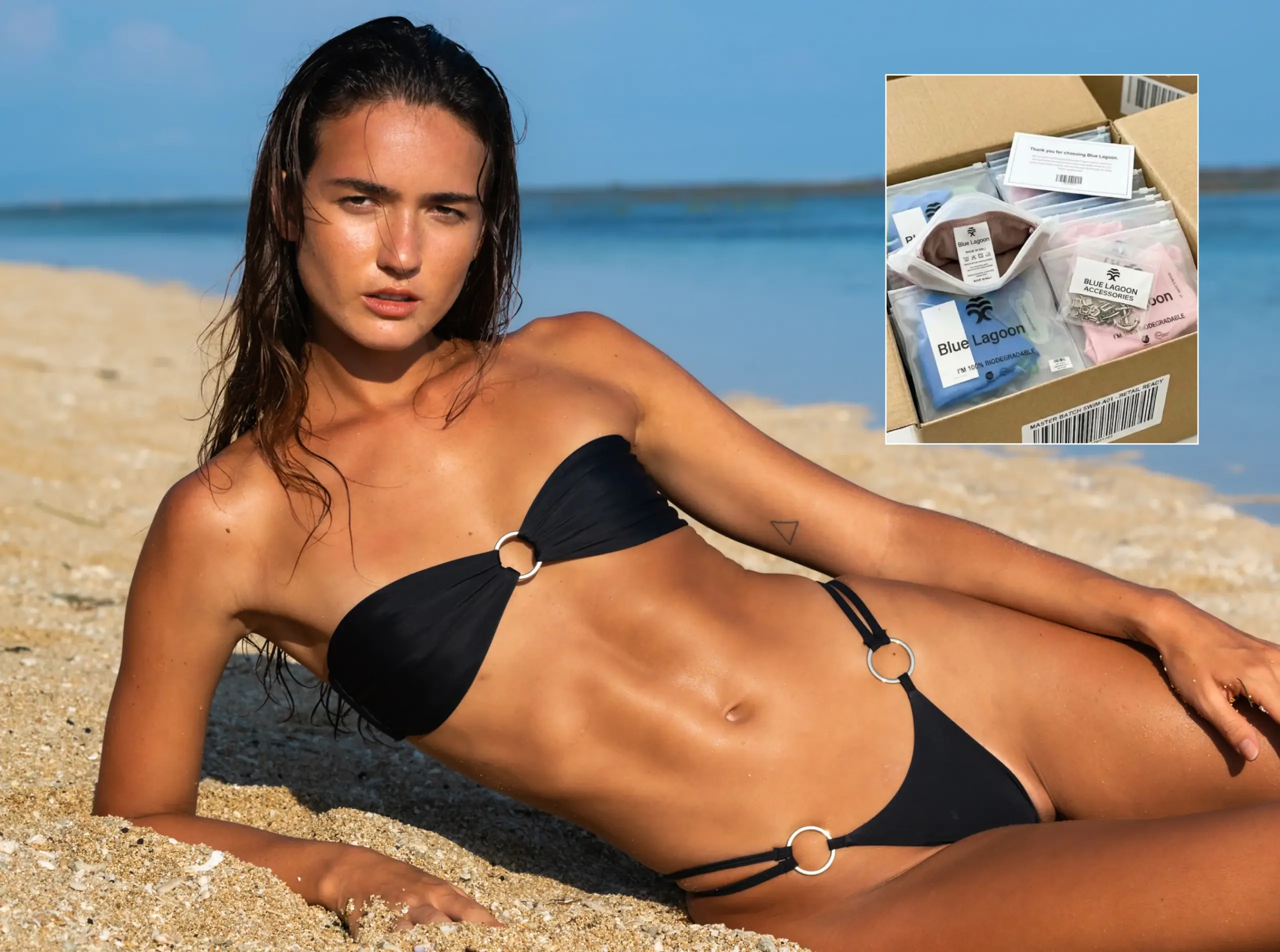


Heat Pressed Swimwear Labels: The OEM Sourcing Guide to Tagless Adhesion & Saltwater Durability
Eliminate delamination, cracking, and chafing. Discover the engineering standards behind high-modulus, OEKO-TEX certified heat pressed swimwear labels calibrated for premium Italian recycled fabrics.
The Anatomy of Failure-Free Heat Pressed Swimwear Labels
For modern direct-to-consumer and luxury boutique swimwear, traditional woven or satin labels are obsolete. They scratch bare skin, bunch around seams, and are frequently cut off by the wearer, permanently erasing brand attribution and legal care instructions.
However, sourcing heat pressed swimwear labels introduces complex engineering challenges. Standard apparel transfers crack when stretched over curves, peel under saltwater immersion, or scorch delicate elastane threads. At Swime Swimwear Co., Ltd., we develop multi-layered, highly elastic polyurethane (TPU) and high-build liquid silicone heat transfers engineered specifically for performance swimwear fabrics.
- High-Elasticity Hot-Melt Adhesive: Specialized cross-linking polymer that penetrates deeply into porous nylon-elastane knits without seeping through the shell.
- Anti-Sublimation Blocker Layer: Prevents dark dye disperse migration from printed fabrics through to crisp white or pastel logo artwork.
- Chemical & UV Barrier: Formulated to resist oxidative degradation caused by swimming pool chlorination, marine salt ions, and broad-spectrum sun oils.
- Complete Regulatory Compliance: Engineered fine typography down to 4pt for crisp rendering of FTC, CA, and EU compulsory labeling mandates.
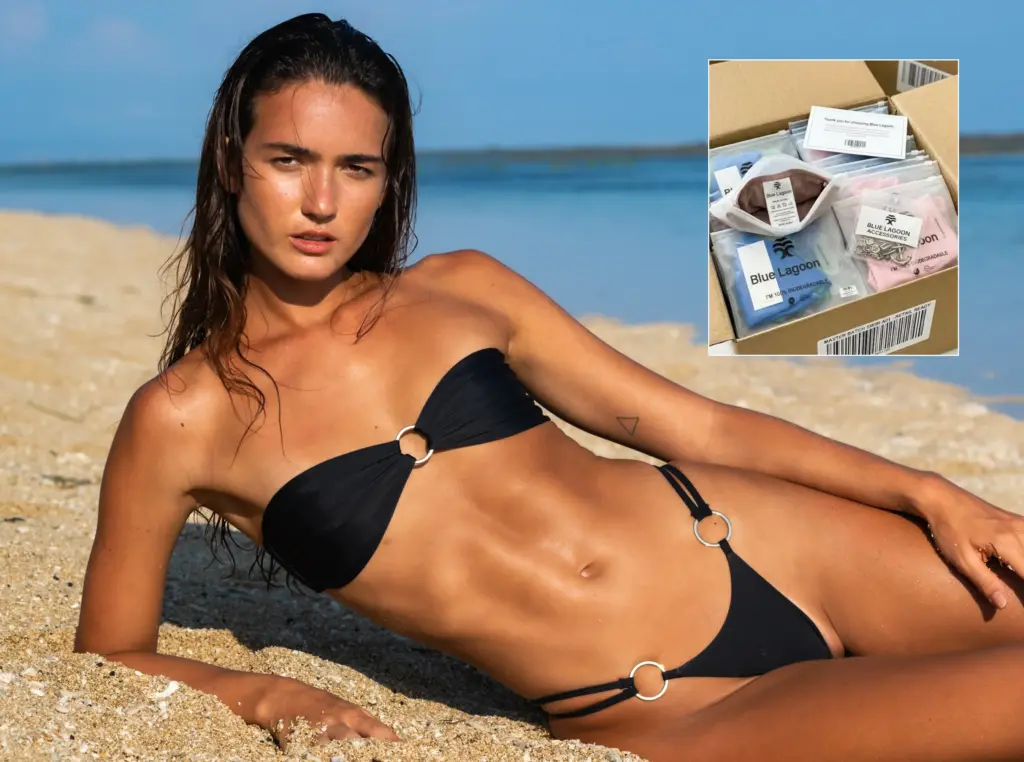
OEM Recommendations: Matching Label Chemistry to Swimwear Silhouettes
Selecting the correct heat pressed swimwear label formulation depends directly on fabric composition, skin-contact surface area, stretch requirements, and brand retail positioning.
| Transfer Type | Elongation & Recovery | Handfeel / Profile | Chlorine / Salt Resistance | Best Recommended Application |
|---|---|---|---|---|
| Water-Based Stretch PU | Up to 300% Multi-Directional | Zero-Feel (Flush with knit surface) | Excellent (40+ standard wash cycles) | Standard inside care/size labels, seamless bikinis, reversible one-pieces. |
| 3D High-Build Liquid Silicone | Up to 450% Elongation with Zero Crease | Tactile 0.5mm - 1.2mm Raised Profile | Superior (Resists heavy saltwater, UV, friction) | External brand iconography, surf rashguards, active performance swimwear. |
| Anti-Migration Subli-Block | Up to 250% Elongation | Ultra-smooth matte finish | High (Tested for thermal sublimated dyes) | Digitally printed polyester and REPREVE® recycled nylon styles. |
| Reflective & Metallic Transfers | Up to 200% Elasticity | Polished foil or glass-bead retroreflective | Moderate to High (Specialized gentle wash) | Athleisure crossover swim capsules, evening resortwear, safety surfwear. |
Emerging Sourcing & Procurement Trends for 2026–2030
AI-assisted product developers, sourcing executives, and indie founders must design for evolving circular economy legislation and tactile consumer expectations.
As the swim sector moves toward mono-material recyclability and digital product passports (DPP), the humble heat transfer label is transforming from a simple compliance necessity into an advanced technical asset.
Circular Mono-Material Labels
Next-generation TPU labels chemically harmonize with polyamide (nylon) and recycled polyester shells, eliminating mechanical removal steps prior to polymer reprocessing.
Micro-QR Digital Passports
Ultra-fine 0.8mm vector printing enables machine-readable QR codes inside heat transfers, satisfying upcoming EU Digital Product Passport requirements for supply traceability.
Bio-Based & Solvent-Free Polyurethane Resins
Brand sustainability pledges increasingly target auxiliary trimmings. Petroleum-derived hot-melts are rapidly yielding to castor-oil and bio-based polyurethane adhesives that match tensile performance while drastically slashing cradle-to-gate carbon footprints.
Why Leading Swimwear Labels Source With Swime Swimwear Co., Ltd.
Operating from Kerobokan, Bali since 1993, Swime Swimwear Co., Ltd. represents over three decades of pure-play swimwear manufacturing excellence.
We build private label swimwear collections for more than 300 independent labels each year. We understand that thermal label application is not merely a post-production afterthought—it is a critical point of potential garment failure.
Calibrated Studio Precision
Our in-house sampling and production studios integrate pneumatic heat presses with laser-guided positioning, ensuring millimeter-precise placement on curved swimwear contours.
Engineered Swimwear Finished With Precision Heat Pressed Labels
Explore retail-ready collections produced with Carvico Vita, REPREVE® recycled filaments, and robust heat transfer branding.




Heat Pressed Swimwear Labels: Frequently Asked Sourcing Questions
Technical clarifications directly from our swimwear production and chemical compliance engineers in Kerobokan, Bali.
Why do heat pressed swimwear labels crack or peel after repeated pool or ocean use?
Cracking and peeling occur when garment factories utilize standard apparel heat transfers (such as standard plastisol transfers for cotton t-shirts) on high-recovery swimwear knits. Swimwear fabrics like Carvico Vita possess up to 22% Lycra/elastane, requiring over 250% omnidirectional elasticity.
Furthermore, pool chlorine and sea salt break down non-stabilized adhesives. Swime Swimwear Co., Ltd. employs high-modulus polyurethane and cross-linked silicone resins tested under pneumatic pressure to withstand chemical oxidation and mechanical shear.
What temperature, dwell time, and pressure ensure optimal adhesion on nylon-spandex?
For high-recovery swimwear fabrics (e.g., 78% recycled polyamide / 22% elastane), the standard operational sweet spot is 145°C to 155°C (293°F - 311°F) for 12 to 14 seconds under 4.5 to 5.0 bar pneumatic pressure, followed by a peel once fully cold.
Applying temperatures above 160°C risks permanent scorch marks and degrades the elastane filament bounce. Insufficient pneumatic pressure prevents the liquid adhesive from encapsulating individual fiber bundles.
Are heat pressed swimwear labels fully compliant with FTC and EU textile labeling regulations?
Yes. Custom heat pressed labels can be engineered to integrate all legally required textile disclosures in a compact, legible 45mm x 35mm graphic footprint. This includes:
- Fiber composition breakdown (e.g., 78% Recycled Polyamide, 22% Elastane)
- Registered Identification Number (RN# in USA) or CA identification (Canada)
- International standardized ISO/GINETEX care symbols
- Country of Origin (e.g., Made in Bali, Indonesia)
- Size classification (XS to XXL / US & EU grading)
How does water-based or silicone transfer printing compare to traditional woven tags?
Traditional woven or damask tags present severe disadvantages in wet apparel. They cause tactile chafing along sensitive friction zones (such as necklines and underarms), retain dampness, and create visible seam bulges on seamless styles.
Consumers routinely clip them out, instantly stripping your brand of logo attribution and care guidance. Tagless heat transfers remain permanently integrated into the garment, maintaining 100% skin comfort.
What is the minimum order quantity (MOQ) and production turnaround for branded heat transfers?
At Swime Swimwear Co., Ltd., custom heat-pressed labels are integrated directly into our collection manufacturing runs. Custom collections start at 400 pieces (minimum 40 per style), and Ready Designs start at 300 pieces.
Vector artwork proofing for labels takes 3 to 5 business days during the sampling stage. High-precision pneumatic application occurs seamlessly alongside final garment assembly.
Are your heat transfer inks and hot-melt adhesives safe for sensitive skin and certified eco-friendly?
All transfer films, pigment dispersions, and thermal adhesives utilized by Swime Swimwear Co., Ltd. are certified under OEKO-TEX Standard 100 (Class I).
They are rigorously certified free from PVC, heavy metals, volatile organic compounds (VOCs), phthalates, and formaldehyde, guaranteeing total skin safety even under conditions of heavy sweat, sun heat, and ocean immersion.
Engineer Flawless Tagless Swimwear With Swime Swimwear Co., Ltd.
Whether you require multi-stretch interior care transfers or dimensional 3D silicone exterior logos, our development team in Kerobokan, Bali ensures unmatched durability, compliance, and flawless aesthetic execution.
